Artificial intelligence is transforming content creation at an unprecedented pace. Brands are now able to produce videos, ads, and digital media without the constraints of production time. In the era of increasingly AI-generated content, two phrases are gaining more traction in marketing discussions: AI-ready faces and AI avatars.
On the surface, they might appear the same but are quite different and have different benefits. It’s crucial for brands to grasp the difference, as it enables them to develop real, scalable, and legally sound AI-generated material.
This is where the debate around AI-ready faces vs AI avatars becomes more relevant for brands.
What Are AI-Ready Faces?
AI-ready faces are real creators who consent to the use of their identity for AI generated content. Brands can use their facial features, expressions, likeness, and visual attributes to create AI-generated content without losing any connection to the actual human being.
Because AI-ready faces are based on real, verified individuals, they help brands create AI-generated content that feels more authentic and human. This makes them particularly valuable for advertising, marketing campaigns, and brand communication where audience trust and relatability are important.
As the use of AI-generated content grows, real human identities are becoming an increasingly popular choice for marketing campaigns, digital advertising, training materials, and brand communication. They combine the efficiency and scalability of AI with an added layer of authenticity, trust, and legal assurance.

What Are AI Avatars?
AI avatars are synthetic digital characters created using artificial intelligence. They can take on human forms, fictional characters, or completely computer-generated personalities.
These synthetic characters can be customised in terms of appearance, voice, language, and behaviour, depending on the intended use. They are commonly used for virtual presentations, educational content, customer support, and other digital interactions where a digital spokesperson is required.
Unlike AI-ready faces, AI avatars are not based on a real individual. Instead, they are created as synthetic digital entities that can be used across different content formats and communication channels.
Also Read: When Generative AI Meets Creativity: The New Era of Ad Film Storytelling
The Difference Between AI-Ready Faces and AI Avatars
It is important to know the difference between AI-ready faces and AI avatars for selecting an appropriate solution for a campaign.
AI-ready faces are based on real creators who have consented to the use of their identity for AI-generated content.
AI avatars, however, are completely virtual creations. These have some flexibility and customisation options but don’t always give the same feeling as a human face.
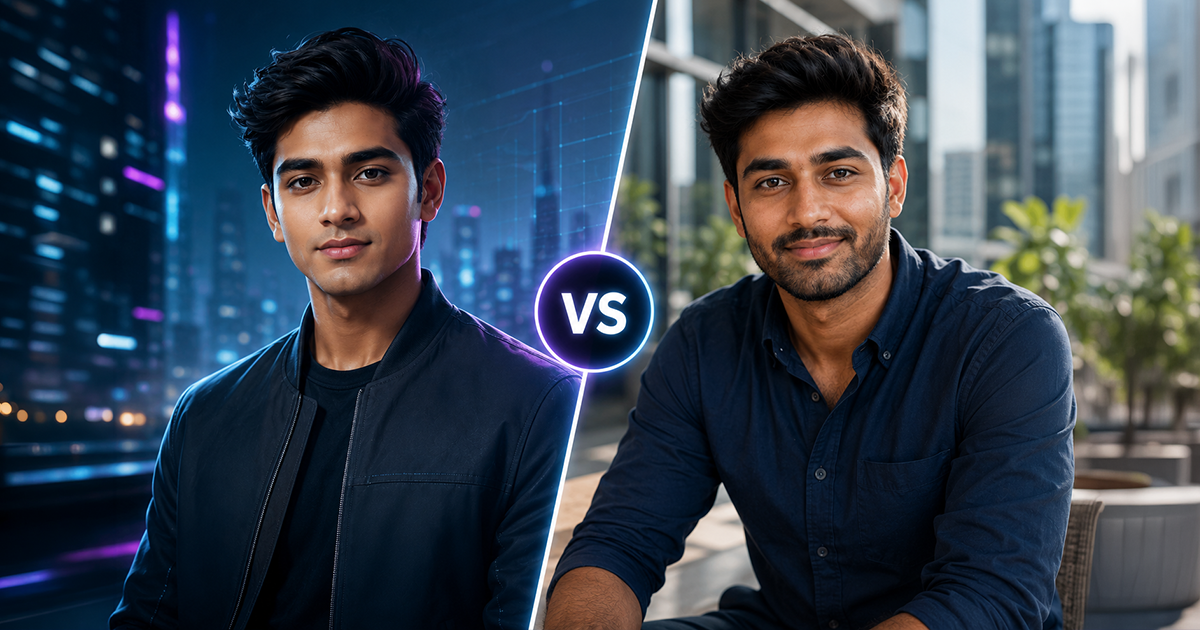
AI-Generated Faces vs AI Avatars
Although the terms are sometimes used interchangeably, AI-generated faces and AI avatars are not the same. The table below highlights their key differences.
| Feature | AI-Ready Faces | AI Avatars |
|---|---|---|
| Authenticity | Based on real individuals, offering a more authentic and relatable human presence | Synthetic digital characters with no connection to a real person |
| Legal Assurance | Built on clear consent and usage permissions from the individual | Usage rights vary by platform and creation method |
| Audience Trust | Often perceived as more credible and familiar by audiences | May require additional context to establish trust and relatability |
| Scalability | Enables brands to create large volumes of AI-generated content | Scalability may be limited by audience acceptance and the effectiveness of synthetic personas |
| Best Use Cases | Brand communication, marketing campaigns, personalised content, and customer-facing experiences | Customer support, educational content, virtual assistants, and internal communications |
Also Read: How AI Is Transforming Influencer Marketing: Role and Impact
The Growing Role of AI in Content Creation
AI technology is helping brands create content faster and more efficiently than traditional production methods. However, success depends on selecting the right creative assets for specific objectives.
The key takeaway is that while businesses can opt for AI-ready faces or AI avatars, the right choice will always be the one that matters for the audience, is consistent with the brand, and ensures responsible content creation. Brands that take note of the differences will be better prepared for informed creative decisions in the future as AI-generated content evolves.
Conclusion
In the future, both real identities and virtual AI generated characters will be used for content creation. They each have specific functions and benefits depending on the campaign objectives.
Understanding AI-ready faces vs AI avatars can help brands select the most suitable approach for their content requirements. AI avatars offer greater flexibility and customisation, while AI-ready faces provide the authenticity and familiarity of real, individuals. With businesses looking into AI-generated content, understanding each type and when to implement them could be crucial to successful campaigns.
Frequently Asked Questions
Can AI-ready faces be used across multiple marketing campaigns?
Yes, AI-ready faces can be used for various content formats and campaigns, subject to the licensing terms and permissions associated with the individual.
Are AI avatars suitable for multilingual content creation?
Yes, AI avatars can be adapted for multiple languages and communication formats, making them useful for global and multilingual content requirements.
How do brands decide between an AI-ready face and an AI avatar?
The choice depends on the project’s requirements. If a brand wants to use the identity of a real creator for AI-generated content, AI-ready faces provide a consent-based approach. AI avatars are fully synthetic digital characters, making them suitable when a real person’s identity is not required.