AI video generation has become incredibly accessible. Today, anyone can create AI-generated videos, digital avatars, synthetic influencers, and virtual spokespersons in a matter of minutes. Brands are experimenting with AI content at an unprecedented pace, and agencies are under pressure to produce more content, faster and at lower costs. But there is one question that continues to create uncertainty: Do you have the right to use that face for AI content creation?
As AI-generated content becomes mainstream, businesses face growing concerns around consent, likeness rights, intellectual property, identity misuse, and brand safety. Using a person’s face, voice, identity, or likeness without proper permissions can expose brands to legal disputes, reputational damage, and compliance risks. This is where AI-Ready Faces comes in.
What Are AI-Ready Faces?
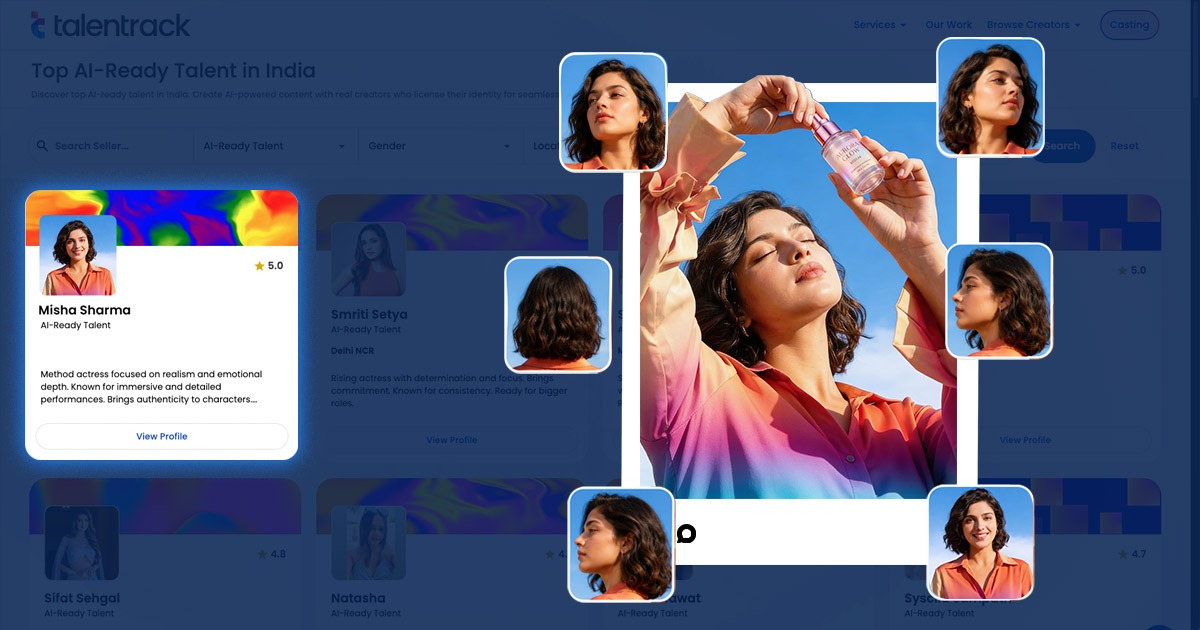
AI-Ready Faces is India’s first compliant talent ecosystem, bringing together a curated network of real creators, influencers, actors, presenters, and talent who have explicitly consented to the use of their face, identity, likeness, and digital representation for AI-generated content creation. Unlike generic AI avatars or unauthorised AI-generated synthetic personas, AI-Ready Faces are backed by explicit AI likeness consent, digital replica agreements, and defined commercial usage rights. This enables brands, agencies, and production houses to create compliant AI content while delivering consistent brand representation and the ability to produce content at scale.
Simply put: AI-Ready Faces enables brands to create AI-generated content with confidence by working with talent who have explicitly agreed to the use of their identity, face, and likeness.
Why Consent Matters More Than Ever
The rapid growth of generative AI has created a new challenge for marketers and content creators. While AI tools can generate highly realistic humans, many organisations are asking important questions:
- Is the face being used with permission?
- Has the individual consented to AI replication?
- Who owns the rights to the generated content?
- Can the person’s likeness be used commercially?
- Are there legal risks associated with future usage?
As regulations evolve globally, these questions are becoming increasingly important. For brands, the cost of getting this wrong can be significant. Beyond legal implications, unauthorised use of likeness can result in:
- Consumer backlash
- Creator disputes
- Negative press coverage
- Campaign disruption
- Loss of brand trust
The future of AI content creation will not be defined by who can generate content fastest. It will be defined by who can generate content responsibly.
Introducing a Consent-First AI Talent Ecosystem
AI-Ready Faces creates a bridge between AI technology and real talent. Instead of relying on anonymous AI-generated synthetic faces or uncertain licensing arrangements, brands can work with real creators and influencers who have chosen to give consent to make their digital likeness available for AI-powered projects.
Every AI-ready face originates from a real person who understands how their likeness may be used and participates voluntarily in the ecosystem. This creates a more transparent and trustworthy approach to AI content creation.
How AI-Ready Faces Work
Step 1: Creator Opt-In
Creators, influencers, actors, and presenters choose to participate in the AI-Ready Faces program. They provide explicit consent for approved AI-content opportunities.
Step 2: Digital Likeness Preparation
The creator’s face, appearance, voice, and communication style are prepared for AI-generated content workflows. This creates a digital representation that can be used within agreed usage frameworks.
Step 3: Brand Requirement
A brand, agency, or production house identifies suitable AI-ready talent based on campaign objectives, audience relevance, demographics, industry expertise, or content style.
Step 4: AI Content Generation
Approved AI tools generate content featuring the selected talent’s digital likeness. This can include:
- Marketing videos
- Product explainers
- Training content
- E-commerce content
- Social media assets
- Regional language adaptations
Step 5: Responsible Deployment
Content is deployed according to agreed usage rights, ensuring transparency and accountability throughout the process. 
Why Brands and Agencies Need AI-Ready Faces
Eliminate Rights and Consent Uncertainty
Perhaps the biggest advantage of AI-Ready Faces is clarity. Instead of questioning whether a face can be used commercially, brands gain access to talent who have already agreed to participate in AI-generated content opportunities.
Reduce Legal and Reputational Risk
Consent-first AI content creation helps organisations avoid many of the challenges associated with unauthorised likeness usage.
Access Real Creators Instead of Synthetic AI Faces
Consumers connect with people, not stock avatars. AI-Ready Faces enables brands to create content featuring recognisable creators, influencers, actors, and presenters rather than synthetic characters with no real-world identity.
Scale Content Production
Once rights and permissions are established, brands can create significantly more content across formats, languages, and channels.
Faster Campaign Execution
Traditional production often requires scheduling, travel, shoots, editing, and approvals. AI-powered workflows help reduce production timelines while maintaining a human presence in content.
Who Can Use AI-Ready Faces?
Whether you’re building marketing campaigns, training content, or digital experiences, AI-Ready Faces can be used by:
Brands
Create product videos, campaign assets, and customer communication content.
Agencies
Deliver scalable AI-powered campaigns for clients.
Production Houses
Expand creative capabilities and reduce production dependencies.
E-commerce Businesses
Generate product demonstrations and educational content at scale.
Corporate Organizations
Create training, onboarding, and internal communication content.
Media Companies
Produce localised and personalised content efficiently.
AI-Ready Faces vs Traditional Avatars
| Traditional AI Avatars | AI-Ready Faces |
| Often anonymous or synthetic | Based on real talent |
| Rights can be unclear | Consent-driven participation |
| Limited audience connection | Real human identity and credibility |
| Potential compliance concerns | Transparent usage framework |
| Generic representation | Creator and influencer ecosystem |
AI-Ready Faces and the Rise of Digital Twins
Digital twins are becoming one of the most significant developments in the creator economy. Instead of relying solely on physical availability, creators can expand their reach through AI-powered representations. This creates opportunities for:
- Additional revenue streams
- More brand collaborations
- Global audience reach
- Content localisation
- Greater content output
For brands, these AI clones unlock scalable access to trusted personalities. For creators, they unlock scalable influence.
Final Thoughts
AI-generated content is transforming marketing, advertising, and digital communication. But technology alone is not enough. The future belongs to organisations that can balance innovation with responsibility.
AI-Ready Faces provides brands, agencies, and production houses with access to real creators and influencers who have consented to the use of their likeness for AI-generated content and to make AI clones. The result is a safer, more transparent, and more scalable approach to AI content creation—one that protects creators, empowers brands, and builds trust in the next generation of digital media.
Frequently Asked Questions
Are AI-ready faces real people?
Yes. AI-ready faces are based on real creators, actors, influencers, presenters, or professionals who participate in the training process.
Can AI-ready faces speak different languages?
Yes. Many AI platforms can generate content in multiple languages while preserving the creator’s appearance and communication style.
Are AI-ready faces legal?
Yes. AI-ready faces are built on a consent-first approach, where individuals voluntarily opt in to make their likeness available for AI-powered content creation. With clearly defined usage rights, permissions, and contractual agreements in place, brands and agencies can use AI-ready faces confidently and responsibly across advertising, branded content, and digital campaigns.
Do AI-ready faces replace creators?
No. They extend a creator’s ability to produce content and participate in campaigns without requiring constant physical involvement.