Advertising has always been driven by creativity, storytelling, and the ability to connect with audiences. However, the rise of artificial intelligence is changing how ad films are conceptualized, produced, and delivered. Today, brands are exploring new ways to combine human creativity with advanced technology to create more engaging and efficient campaigns.
Rather than replacing creative professionals, AI is becoming a powerful tool that supports ideation, content development, and production workflows. This shift is creating new opportunities for advertisers, filmmakers, and brands to rethink how stories are brought to life.
As a result, generative AI in advertising is rapidly becoming an important part of modern ad film production.
How AI Is Transforming Ad Film Creation
Traditional ad film production often includes extensive planning, scripting, storyboarding, editing, and post-production work. Although creativity plays a significant role throughout, AI technology speeds up many of the production tasks.
Nowadays, AI can assist in:
- Concept generation
- Script creation
- Storyboarding
- Reference visuals
- Voice generation
- Video editing
- Audience insights
These capabilities enable the creative team to use less time on redundant activities and more time on developing concepts that connect with the audience. The result is more efficient production without sacrificing creativity.
Also read: How AI is Reshaping Video Production
The Evolution of AI Ad Film Storytelling
One of the most intriguing developments in this field has been the rise of AI ad film storytelling. Brands are now using AI tools to experiment with various approaches to developing a story, exploring other ideas, and determining narrative structures that align with their target audiences.
Nevertheless, storytelling always requires creative human input. Although AI technology might help identify patterns, humans excel at understanding emotions and culture.
The most successful campaigns often integrate AI-driven insights with human creativity. By combining both approaches, teams can create compelling stories based on real data while remaining emotionally appealing.
Speed and Scalability in Creative Production
A modern-day brand is expected to create content for various platforms in multiple formats. Creating individual versions of campaigns that target separate groups of consumers is time-consuming and resource intensive.
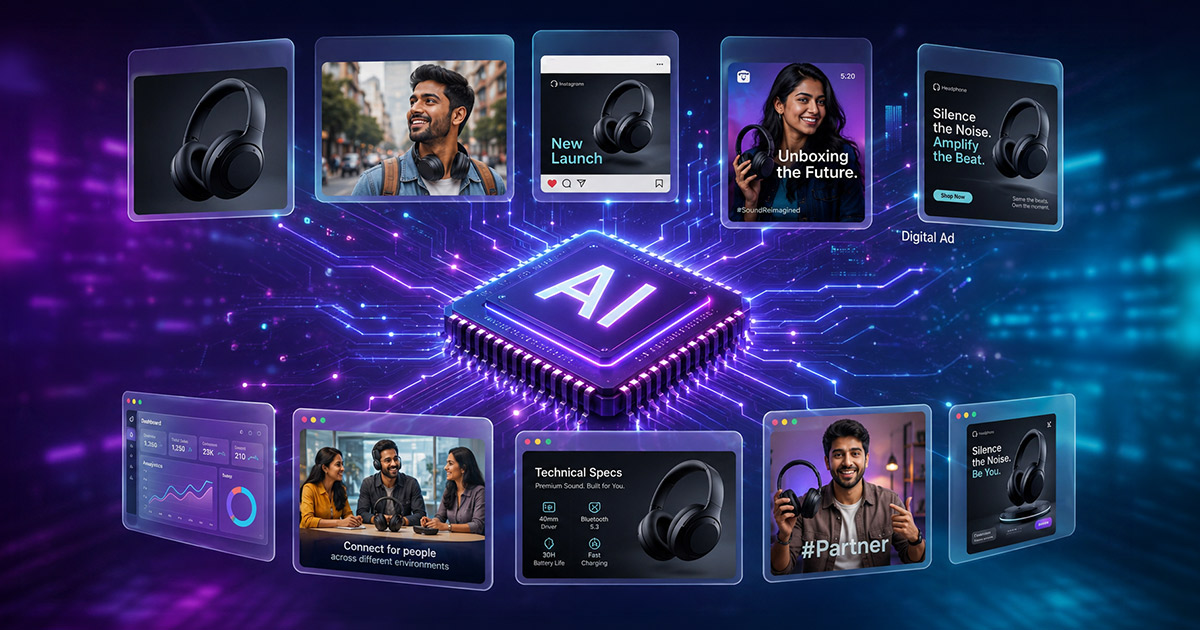
This is precisely where AI-powered video production comes into play. AI can generate various content variations that would be adaptable to various platforms. Brands can try various types of videos without having to start their campaign from scratch.
This gives businesses an edge over their competition because they can react fast to various consumer demands.
Personalization at Scale
Consumers increasingly demand relevant content based on their preferences and needs. Traditional approaches to production usually hinder personalization because they lack time and budget resources.
Generative AI is assisting in overcoming this challenge by allowing brands to create customized content variations more effectively.
For instance, a marketing campaign can be tailored to fit various markets and audiences without compromising on the consistency of the brand’s messaging. The personalization capabilities offered by generative AI have been recognized as a huge asset in ensuring that brands connect with their audiences.
As brands continue to explore generative AI in advertising, personalization is likely to become a significant focus.
The Role of Human Creativity
Although there have been great developments in technology, creativity is still essential in creating effective advertisements. Even if artificial intelligence creates ideas and makes work easier, it does not replace human experience and emotion.
Some areas where creative professionals play an important role include:
- Defining brand narratives
- Developing emotional storytelling
- Making creative decisions
- Understanding audience sentiment
- Ensuring authenticity
The future of advertising will not be based on artificial intelligence exclusively but rather on collaborations between creative talent and technology.

Opportunities and Challenges for Brands
The increased use of AI content creation for ads is beneficial in several ways, including faster creation and more efficiency and greater creative experimentation. Nevertheless, brands need to address certain difficulties, such as originality, content quality, ethics, and consistency with the brand.
Companies using technology in a smart way and exercising creative control are likely to obtain results. It is essential to remember that AI can help improve rather than replace creativity.
By striking the right balance between the two aspects, brands will be able to take advantage of new technologies without sacrificing the human touch of advertisement.
Also read: Future of AI in Branding: Why Every Business Needs it Today
Conclusion
The convergence of creativity and AI is revolutionizing the way ad films are produced today. With accelerated processes, scaled production, and personalized customer experience, AI opens up new opportunities for effective storytelling.
With the continued development of generative AI in advertising, brands that leverage both technology and creativity are more likely to develop successful campaigns. The use of platforms such as Talentrack enables brands to reach out to creative individuals who are able to help develop novel advertising concepts.
Frequently Asked Questions
Can generative AI help reduce ad film production costs?
Yes. AI can automate some of the production tasks, thus enabling the brands to allocate their resources better and save time on content development.
Is generative AI suitable for small and medium-sized brands?
Yes, generative AI could benefit companies of various sizes by creating efficient content and allowing them to test various creative concepts without putting lots of effort into production.
How can brands maintain originality when using AI in advertising?
Brands can ensure originality in ads by combining creativity from the human minds, AI tools, and original stories.