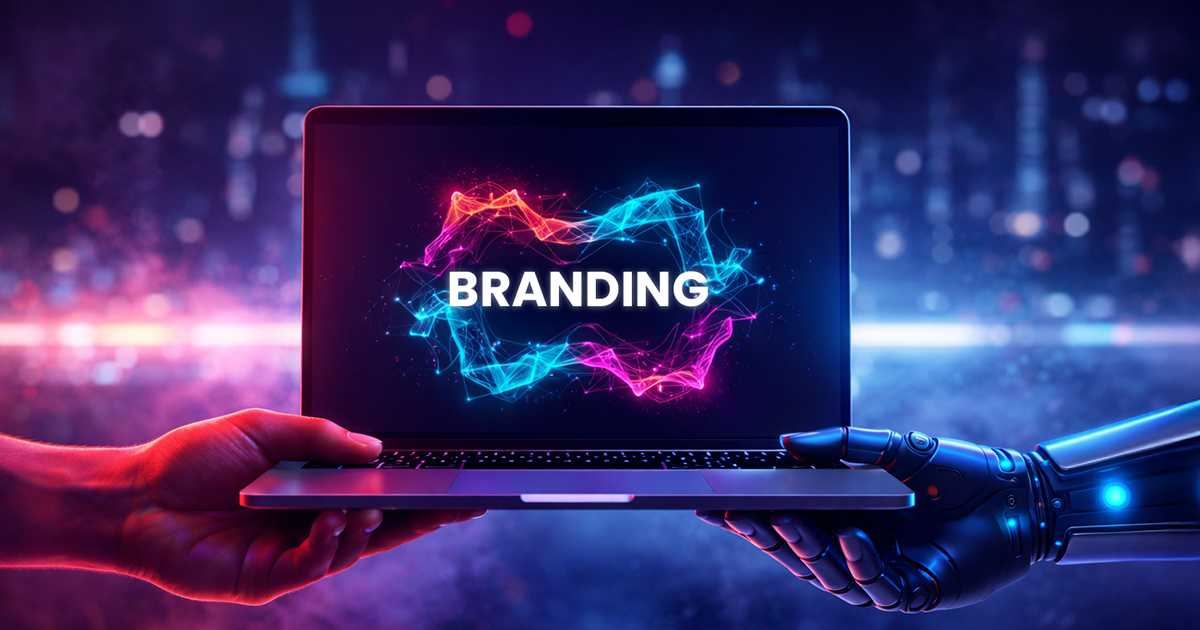
AI in branding is no longer a far-fetched idea reserved for big businesses or research groups. By 2026, AI will have emerged as a baseline force in how brands understand their customers, craft messages, and remain relevant in highly volatile markets. Businesses that disregard the future of AI in branding risk falling behind competitors who already employ data, automation, and intelligent systems to shape brand perception in real time. Branding Today is dynamic. There is a fast shift in consumer expectations, an increase in digital platforms, and constant changes in the consumption habits of the content. Such an environment demands brand fluidity, data intelligence, and high responsiveness, which cannot be sustained solely through conventional branding processes. This is where AI-enhanced branding reshapes the equation by shifting reactive communication to a predictive one.
Artificial Intelligence is Transforming Brand Strategy in its Revision
The future of AI in branding lies in its ability to process vast volumes of behavioural, demographic, and contextual data. Artificial intelligence helps brands recognise trends missed by humans, enabling more accurate audience segmentation and precise positioning. Instead of having a general message, it is now possible to create messages that closely align with consumer intent as it evolves.
The application of AI in brand marketing leads to more innovative processes for campaign planning, content direction, and channel selection. Algorithms change performance, engagement, and sentiment indicators to inform creative and strategic decisions. This helps eliminate assumptions in branding choices and instead provides evidence to support them, making marketing much more effective.
Personalisation Among the Standards of Branding
Customers are no longer sensitive to generic communications. The future of AI in branding is profoundly intertwined with personalisation at scale. With the help of AIs, brands can customise messages, images, and personalised offers, making interactions with users meaningful and not annoying.
Safeguarding branding with AI enables companies to adjust the tone, timing, and format based on the audience and platform context. No matter how dynamic the content is on a website, in an automated email sequence, or in tailored advertisement copy, AI is used to ensure that brand communication happens at the right time and responds to users’ expectations, thus engaging them and enhancing brand memory and trust.
Artificial Intelligence Promotes Brand Coherence and Control
Quite the contrary, managing a brand across multiple markets, channels, and teams is complex. Brand management using AI brings order and control, automating monitoring, reporting, and performance analysis. AI tools monitor brand mentions, sentiment shifts, and competitor actions, providing businesses with real-time data on how their brand is being viewed.
The future of AI in branding also includes automated brand governance. Ensuring visual consistency and adhering to messaging guidelines are just some of the reasons why AI systems can help organisations maintain integrity amid rapid scale in content production. This will help eliminate disjointed communication and preserve long-term brand equity.
Imaginative Intelligence Collides With Work Process Effectiveness
AI is not about replacing creativity; it enhances it. In the future of AI in branding, human creativity works in tandem with machine intelligence. AI supports trend analysis, concept testing, and performance prediction, freeing creative teams to focus on high-value storytelling rather than repetitive work.
The role of AI agencies in branding is growing, as they combine technological skills with branding strategies. Such designated teams can help companies integrate AI tools successfully, so that automation improves brand strategy rather than complicates it. As AI capabilities advance, collaboration between brand teams and AI-oriented partners becomes even more critical.
Expanding AI Branding Ecosystem and Talentrack
As the future of AI in branding accelerates, businesses often require access to specialised AI talent and agencies that understand both branding and advanced technologies. Talentrack, as a content marketplace, allows organisations to connect with ai agencies and professionals across digital strategy, creative production, and newly emerging AI-led solutions. Acting as a formal intermediary between companies and professional collaborators, the platform helps brands explore AI-based branding projects without having to navigate the criticisms of sourcing fragmentation, making it easier and more beneficial to transform a company into an intelligent brand system.

Competitive Advantage in the Age of AI
The future of AI in branding is not a trend to observe; it is a shift to participate in. Brands that adopt AI early gain advantages in agility, depth of insight, and operational efficiency. They will be able to react faster to market cues, streamline campaigns in real time, and build stronger relationships with their audiences.
Slow businesses might define their response as a reaction to the business that is already running, with more sophisticated systems and a more efficient brand direction. Branding is one of the areas where AI can enable companies to be more creative and focus on data, communicate on a much larger scale (and remain applicable), and maintain a consistent brand presence in an increasingly complex digital environment.
The brands leading in 2026 and beyond will be those that do not consider AI as an add-on to the brand structure, but rather make it a core pillar of branding.
Frequently Asked Questions
How is AI transforming brand strategy?
AI is changing the brand strategy through hyper-personalised marketing, predictive consumer data, and the optimization of campaigns in real-time. It helps brands understand customer behaviour better, to automate repetitive processes and create data-driven messages that resonate, which eventually leads to greater engagement and loyalty.
What are the benefits of using AI in brand marketing?
AI in brand marketing enhances personalization, predicts consumer trends, automatization, and enhances engagement, which enables brands to make smarter, data-driven decisions and remain competitive.
How does AI impact content creation in branding?
The implication of AI in branding is used to create content, tailored and high-quality content more quickly, messages to target audiences more effectively, and understand what works and what does not. This enables brands to scale campaigns consistently and reach customers in better ways.