DISCLAIMER: This write-up is for knowledge sharing and collaborative learning only. This is NOT a legal, financial or business advisory of any kind. Readers are strongly advised to use their own research before taking any decision related to this topic. Talentrack (Fameposter) will not be responsible for any actions taken by readers/users of this write-up.
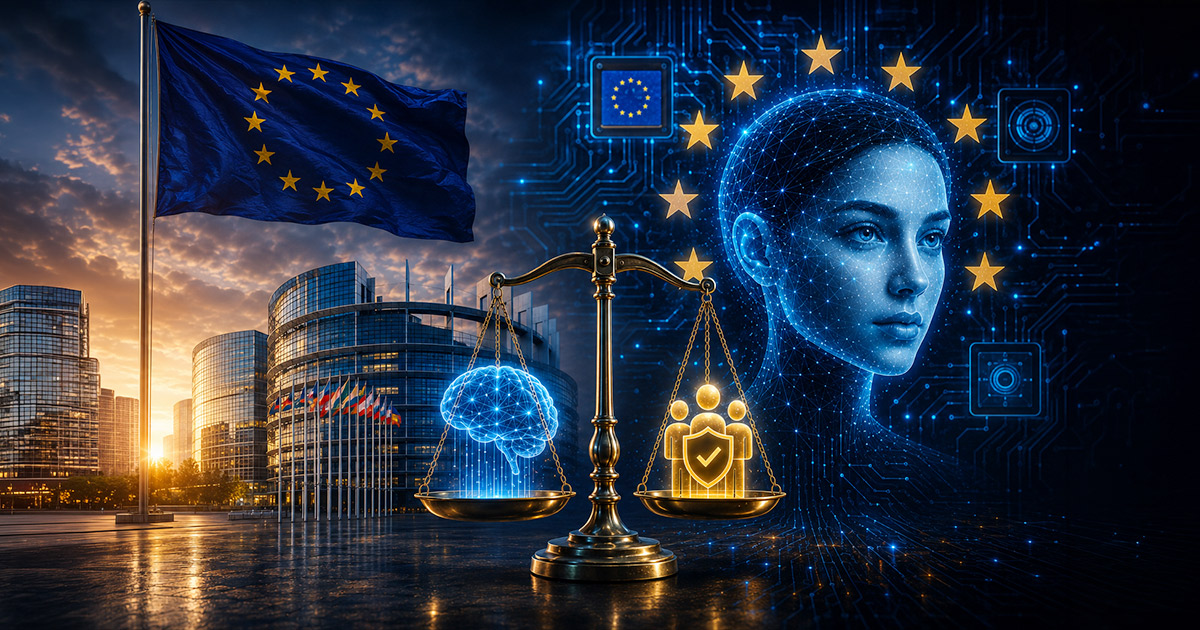
AI-generated faces and identities are changing how brands create video content.
From product demonstrations and ecommerce catalogues to social media ads and training videos, brands can now create realistic digital talent without arranging a new shoot every time. AI actors, AI models for ads and AI avatars for brands are becoming part of a new production workflow that can make content creation faster and more scalable.
But as synthetic media becomes more realistic, regulation is catching up.
The European Union’s AI Act is one of the most important regulations shaping how businesses use AI-generated and manipulated content. For brands using AI faces, virtual presenters or digital talent, understanding the rules is becoming part of responsible content production.
For Talentrack, this is also where the idea of Licensed AI Talent becomes particularly relevant: enabling brands to create scalable AI video content using faces whose use is based on consent and clearly defined usage rights.
What is the EU AI Act?
The EU AI Act is the European Union’s framework for regulating artificial intelligence based on the level of risk associated with different AI applications.
The regulation does not simply ban AI-generated content. Instead, it introduces different requirements depending on how AI is being used, with a strong focus on transparency, safety and fundamental rights.
For content creators and brands, one of the most relevant parts is Article 50, which deals with transparency obligations for certain AI systems and AI-generated or manipulated content.
What Does the AI Act Say About AI-Generated People?
The AI Act specifically addresses AI-generated and manipulated image, audio and video content.
Under Article 50, providers of AI systems that generate synthetic audio, image, video or text content must ensure that their outputs are marked in a machine-readable format and detectable as artificially generated or manipulated, subject to the conditions and exceptions in the regulation.
There is also a specific requirement around deepfakes.
Where an AI system generates or manipulates image, audio or video content that constitutes a deepfake, deployers must disclose that the content has been artificially generated or manipulated.
This is particularly relevant to AI-generated people because a synthetic face can look and behave like a real person while being entirely digitally generated.
The important distinction is that using AI-generated talent is not, by itself, prohibited. The focus is on transparency and responsible use.
Why This Matters for Brands
For brands, AI-generated talent offers a compelling production advantage.
Instead of organising a traditional shoot every time a product, market or campaign changes, brands can create content with digital talent across multiple formats. This can include AI actors for advertising, virtual presenters, AI voice actors and AI avatars for brands.
Think:
- Product demonstrations
- Ecommerce product videos
- Social media creatives
- Training and onboarding videos
- Explainer videos
- Customer communication
- Localised video campaigns
- Multiple versions of the same creative
The production model can become faster and more scalable.
But there is another question brands need to consider:
Who is the face being used, and do you actually have the right to use it?
That is where consent, identity rights and transparency become critical.
AI-Generated Faces vs Digital Replicas of Real People
Not every AI face is created in the same way.
There is an important difference between:
A completely synthetic face: A face generated specifically for AI content and not intended to represent an identifiable real person.
A digital replica of a real person: An AI representation created using a real person’s appearance, voice or likeness.
The second category requires much greater care around consent and usage rights.
If a brand creates a digital version of an actor, creator, influencer or model, it needs appropriate permission for the intended use. That permission should clearly define what the likeness can be used for, where it can appear and for how long.
This is where digital human licensing becomes increasingly important. Rather than treating a person’s face or voice as an unrestricted digital asset, brands can establish defined commercial rights around how a digital representation is created and used.
This is why responsible AI talent should not begin with the technology.
It should begin with the rights behind the face.
Also read: Licensed AI Talent vs AI Avatars: What’s the Difference?
What is Licensed AI Talent?
Talentrack’s Licensed AI Talent is designed for brands looking to incorporate AI-generated talent into their content production workflows.
The offering connects brands with faces whose participation and use are based on consent and defined rights, allowing them to explore AI-powered video production without treating a person’s identity as an unrestricted digital asset.
For brands, this creates a more structured approach to synthetic talent.
Instead of simply generating a random AI face, brands can work with AI-ready talent intended for commercial content production. This can include digital faces for advertising, ecommerce content, social media campaigns and other branded video formats.
That can be particularly useful for ecommerce and D2C businesses that need to produce large volumes of product content.
Also read: Licensed AI Talent: The Complete Guide 2026
Why Consent Matters in AI Video Production
Traditional production already requires agreements covering a model’s image and likeness.
AI makes the question more complicated because a digital representation can potentially be reused across many pieces of content.
A suitable AI talent framework should therefore consider questions such as:
- Has the person explicitly consented to AI-based use of their likeness?
- What types of content can the likeness appear in?
- Which territories are covered?
- How long can the content be used?
- Can the likeness be used across different campaigns?
- Can the face be adapted or modified?
- Can the person’s voice be used through AI voice actors or synthetic voice applications?
- What happens when the agreement ends?
These considerations become even more important when brands operate across multiple markets.
The EU AI Act adds another layer by requiring transparency around certain AI-generated and manipulated content.
AI Transparency Is Not the Same as Avoiding AI
One of the biggest misconceptions about AI regulation is that compliance means brands should avoid synthetic content.
That’s not the direction of the EU AI Act.
The regulation establishes transparency requirements so that people can understand when they are interacting with AI or viewing certain AI-generated or manipulated content. The European Commission’s guidance specifically highlights the need to make AI-generated content recognisable and to provide appropriate disclosure for deepfakes.
For brands, the practical takeaway is simple:
Use AI, but build transparency into the production process.
That can mean appropriate labelling, maintaining documentation around how content was created, and ensuring that the rights behind any identifiable person’s likeness are properly established.
What Brands Using AI Faces Should Do
If your brand is planning to use AI-generated people for commercial content, consider these five areas.
- Establish consent: If a real person’s face or identity is being used, make sure the individual has provided appropriate consent for AI-based use.
- Define usage rights: Consent should be accompanied by clear terms covering commercial usage, channels, territories, duration and permitted applications. This is particularly important when considering digital human licensing for repeated or long-term commercial use.
- Keep AI content identifiable where required: Article 50 introduces transparency requirements for certain AI-generated and manipulated content, including disclosure requirements for deepfakes.
- Maintain a clear content trail: Brands should know where their AI-generated assets came from, which systems were used and what rights underpin the digital talent involved.
- Choose AI talent with commercial use in mind: The question isn’t only whether an AI face looks realistic. It is whether the face can be used responsibly, consistently and at scale for the intended commercial purpose.

The Opportunity for Ecommerce and D2C Brands
For ecommerce brands, the biggest opportunity is not simply replacing human models.
It is changing the economics of content production.
A single product may need dozens of creative variations across platforms, audiences, languages and markets. Traditional production can make that expensive and slow.
AI-ready faces can help brands create a repeatable production layer around digital talent.
For example, the same approved AI-ready face could potentially be used across:
Product → Presenter → Language → Market → Campaign
This makes AI-generated talent particularly interesting for brands producing content at scale. Instead of booking new talent for every variation, brands can explore AI models for ads, AI presenters and AI avatars for different content requirements, subject to the applicable rights and permissions.
The technology creates the possibility of producing more variations. A rights-conscious talent model helps make that production more structured.
Licensed AI Talent: Building the Talent Layer for AI Video
AI video production is moving beyond prompts and generation tools.
The next challenge is creating a reliable talent layer around those tools.
Brands need faces that can be incorporated into product videos, explainers, training content, customer communications and advertising while having a clear understanding of the rights and permissions associated with their use.
That’s the role Licensed AI Talent can play.
Talentrack brings its talent ecosystem into the AI video workflow, helping brands explore synthetic faces, AI presenters and digital talent with consent and commercial usage considerations built into the model.
For businesses producing high volumes of content, this opens up a new approach:
More content. More variations. Faster production. With a clearer framework around the people behind the faces.
This can also extend beyond visual talent. As AI production workflows evolve, AI voice actors and other forms of licensed digital talent can help brands build more complete AI-powered content experiences.
The Future of AI Talent Is Not Just Synthetic. It Is Rights-Aware.
The EU AI Act is an important reminder that the future of AI-generated content isn’t only about making synthetic media look real.
It’s also about making its use transparent and responsible.
For brands, that means thinking about AI talent as more than an image-generation feature. It is a new category of commercial talent that needs appropriate consent, usage rights and production processes.
AI-ready faces give brands a way to build that talent layer for scalable video production.
Whether a brand is exploring AI actors, AI avatars, digital presenters or AI actors for advertising, the underlying question remains the same: who is behind the digital identity, and what rights does the brand have to use it?
As AI-generated content becomes increasingly mainstream, the brands that combine speed, scalability, consent and transparency will be better positioned to use synthetic media responsibly.
Frequently Asked Questions
Does the EU AI Act ban AI-generated faces?
No. The EU AI Act does not generally ban AI-generated faces or AI video production. Instead, it introduces transparency requirements for certain AI-generated or manipulated content and sets specific obligations around deepfakes.
Are AI-generated faces considered deepfakes?
Not necessarily. Under the AI Act, a deepfake involves AI-generated or manipulated image, audio or video content that resembles an existing person, object, place, entity or event and would falsely appear authentic or truthful. Whether content qualifies depends on factors including resemblance and the context in which it is presented.
Why is consent important when using AI faces?
When an AI face is based on an identifiable real person, brands need to consider the individual’s consent and the scope of the rights granted for using their likeness. Clear agreements can help establish how a person’s likeness may be used across commercial content, campaigns and markets.
How can Licensed AI Talent help brands with AI video production?
Licensed AI Talent can give brands access to digital talent for creating scalable content such as product videos, social media creatives, explainers, ecommerce content and advertising. They can help brands produce multiple content variations without organising a new traditional shoot for every asset.
How can brands prepare for using AI talent responsibly?
Brands should prioritise consent, licensing, usage rights and transparency when using AI talent. Working with a provider like Talentrack can simplify this by offering licensed AI talent with documented permissions and defined usage rights.