Enterprise brands often need to produce content across multiple channels, markets and audience segments. From product demonstrations and employee training videos to advertising campaigns, each format brings different creative and production requirements. AI-assisted production offers another way to manage these demands.
AI actors for enterprise production allow brands to use digitally represented performers in AI-generated or AI-assisted videos, subject to relevant permissions and licensing terms. While this approach can offer greater flexibility, its suitability depends on campaign objectives, audience expectations and the role of human creativity.
What Are AI Actors in Enterprise Production?
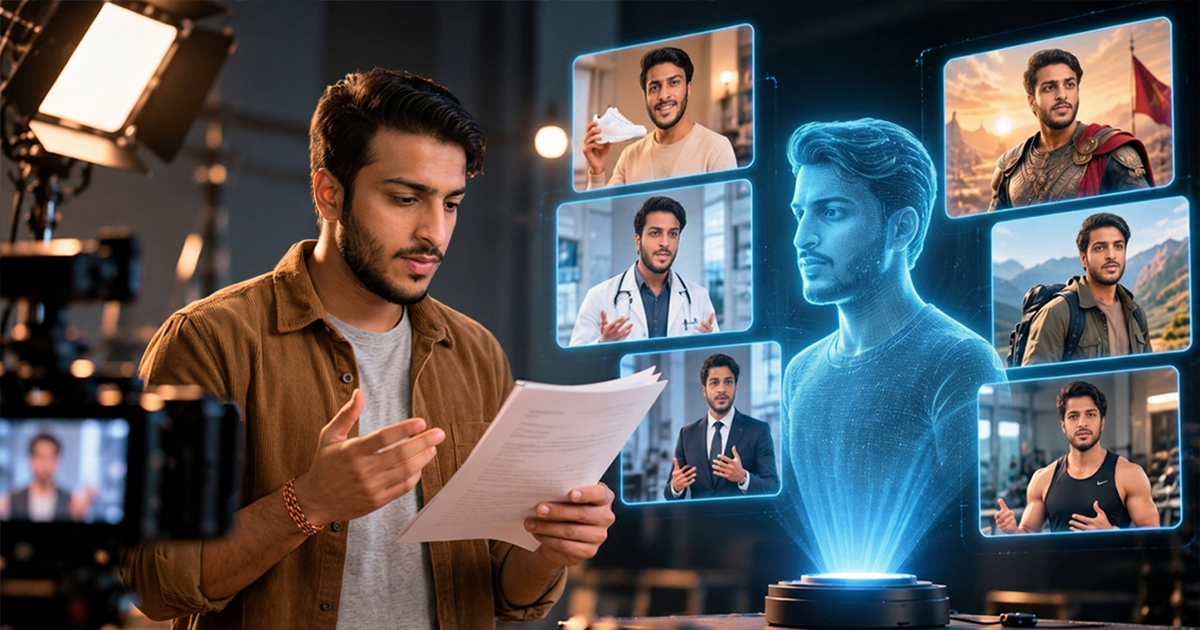
AI actors are digital versions of actors that are employed in AI-generated or AI-powered video production and AI asseted content. There are some that are completely synthetic and others that are based on actual individuals whose likeness is licensed for certain purposes.
This separation is important to enterprise brands. Licensed AI avatars are actual individuals that have granted permission to use their likeness for AI-generated content within defined parameters. This is another opportunity for businesses looking into AI actors in India, balancing digital production with awareness of identity rights and usage.
Benefits of AI Actors for Enterprise Brands
- Greater Production Flexibility
There might be multiple versions of a video for a large organisation, depending on the product, audience or channel. AI-powered workflows can assist teams in making creative adjustments without the need for a separate shoot for each iteration. Actual savings will vary depending on the production method, complexity and approval process.
- Consistency Across Campaigns
To achieve visual continuity, the same licensed digital performer can be used in related videos. This can be beneficial for product explainers, internal communications and campaign assets that need to have a consistent presenter or character. There is a need for creative direction and production quality.
- Support for Multilingual Content
Regional enterprise brands may require to convey the same message in different languages. AI video generation can assist with localisation by customising scripts, voiceovers, and visual content. Human editing is always necessary to ensure the language is accurate, the context is appropriate and the delivery is natural.
- Easier Content Updates
Product information and service processes and internal policies may change over time. For some updates, AI can help streamline the production process, especially when there is a workflow for revisions. If there are substantial changes to the message or performance, further creative and technical work may be needed.
Applications of AI Actors for Brands
Depending on the campaign and the permissions granted to the chosen talent, AI actors for brands can be useful for multiple enterprise use cases.
- Product demonstrations: Explain product features and functionality through digital presenters.
- Corporate communications: Develop onboarding videos, employee training material and internal announcements.
- Marketing and advertising: Explore promotional videos, digital advertisements and branded campaigns featuring licensed digital performers.
- E-commerce content: Support product videos and lifestyle visuals across suitable categories.
- Customer education: Create service walkthroughs, explainers and frequently asked question videos.
- Regional campaigns: Adapt suitable video assets for different languages, markets and platforms, subject to creative and licensing requirements.
Not all these applications are ideal for all businesses. The use of a digital presenter could be helpful for a product walkthrough, whereas a campaign based on personal experience, emotional storytelling or authentic customer interactions might need actual performers and creators.
Also read: AI-Ready Faces: The Complete Guide
Limitations and Considerations for Enterprise Teams
AI actors can give actors more production choices, but they can’t take the place of planning, supervision, or human judgment.
- Consent and usage rights: When a digital performer represents a real person, permissions should reflect the intended use. Terms may cover content formats, platforms, campaign duration, markets and other restrictions.
- Authenticity and audience trust: Realistic visuals do not automatically make a message credible. Content that appears to show a genuine personal experience or endorsement can mislead audiences if presented inaccurately. Appropriate disclosure is also an important consideration.
- Creative quality: AI-generated performances may not always convey subtle emotions, natural interactions or the context a campaign requires. Human direction, editing and review remain valuable.
- Brand and technical review: Generated content can contain visual inconsistencies, inaccurate information or unsuitable representations. Enterprise teams may need review processes covering factual accuracy, brand guidelines and final creative approval.
- Cost and workflow suitability: AI production is not automatically cheaper or faster. Tool requirements, revisions, licensing and quality checks can affect the overall effort involved.

How Talentrack Supports AI-Led Production
Brands can find Licensed AI Avatar, such as actors and models whose likeness can be used for specific AI-generated content with specified permissions, with Talentrack. These profiles can be looked at for the right ads, branded video, product content and other business projects.
Talentrack also links brands with production partners for video and visual content. The correct choice will be determined by the creative brief, production and final use of the assets. Permissions, deliverables and review stages are still significant considerations in planning, as are talent selection.
Finding the Right Role for AI Actors
AI actors for enterprise production can offer flexibility for repeatable, multi-format and information-led content. However, they are not a universal replacement for traditional shoots or human-led storytelling.
The most useful starting point is to identify where AI-assisted content can add value, where human performance remains essential and what permissions and review processes the project requires. With this balance, AI actors can become one option within a broader enterprise content production strategy.
Frequently Asked Questions
Can AI actors be used for internal enterprise training videos?
Yes, they may be suitable for onboarding, process explanations and training videos where a consistent presentation style is useful.
Can AI actors support multilingual enterprise campaigns?
They can support adapted video content across languages, although translation quality, cultural relevance and voice delivery still need review.
Do AI actors replace traditional video production?
No, they offer an additional production option. Traditional shoots and human performers may remain better suited to content requiring natural interaction, emotional depth or genuine personal experience.