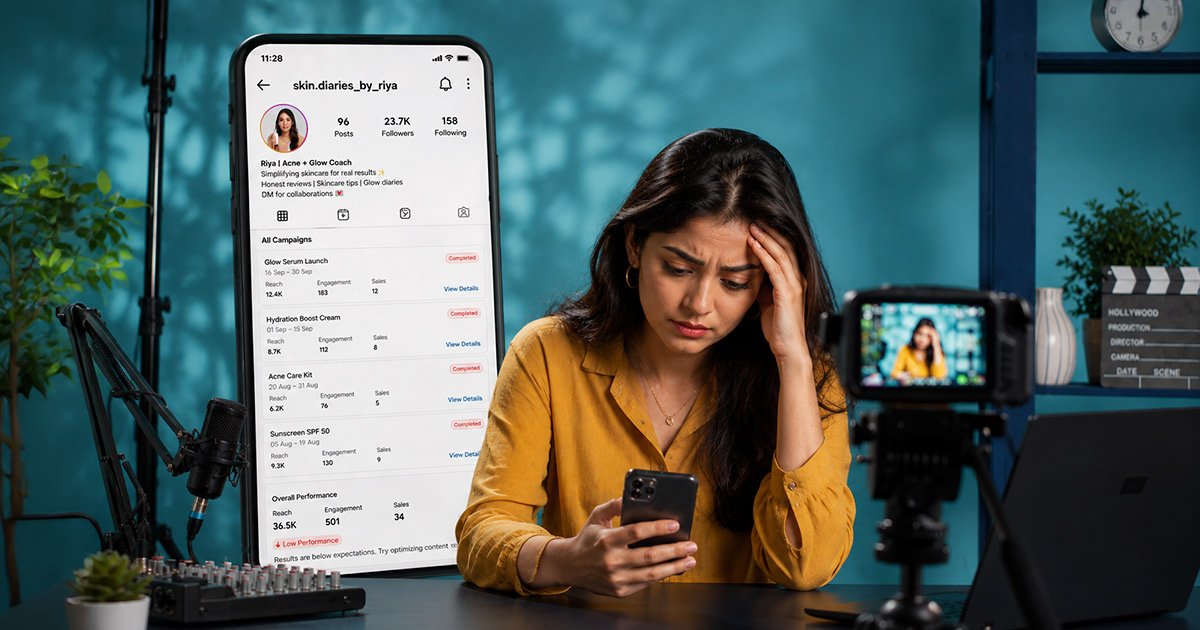
Influencer marketing has become one of the most effective ways for brands to improve visibility, build audience trust, and increase engagement. However, many campaigns still fail to deliver strong results despite significant investment. Low engagement, poor conversions, and weak audience response are common challenges brands continue to face.
In most cases, these problems arise from a poor strategy rather than influencer marketing itself. This blog highlights the real reasons for influencer campaign failure and how brands avoid common mistakes and improve campaign performance more effectively.
Choosing Influencers Based Only on Follower Count
One of the biggest mistakes brands make is choosing influencers based on their follower count. Having a large following does not guarantee engagement or conversion.
Many marketing campaigns fail due to a mismatch between the influencer’s audience and the brand’s customer base. Even creators with millions of followers may generate poor results if their audience is not interested in the product/service.
How to Fix It
Brands should focus more on:
- Relevance of the audience
- Quality of engagement
- Consistency in content creation
- Demographics of the audience
- Influencer credibility
Collaborating with niche or micro-influencers can often yield more effective outcomes due to their specialized, highly engaged audiences.
Lack of Clear Campaign Goals
Lack of clear campaign goals is one of the main reasons for influencer campaign failure. Some brands launch a campaign without deciding whether their objective is to create awareness, generate leads, increase website traffic, gain engagement, or drive sales.
Without a clear goal, it becomes hard to evaluate performance and improve future campaigns.
How to Fix It
Some of the important KPIs of the influencer marketing campaigns are:
- Engagement rate
- Reach and impressions
- Website traffic
- Conversion rate
- Click-through rate
- Audience growth
A clear strategy helps businesses measure results more accurately and optimize campaigns effectively.
Overly Promotional Content Reduces Engagement
Generally, an audience follows the creator for entertainment, learning, opinions, or something that they can relate to. Campaigns fail as the sponsored content appears too scripted or overly promotional.
It is always easier for creators to engage with audiences when they communicate freely without restriction.
How to Fix It
Brands looking for how to fix influencer marketing campaigns should give creators more creative freedom. Some content formats, including tutorials, product reviews, BTS videos, and personal experiences, work effectively due to their authenticity and relatability.
Ignoring Platform-Specific Strategies
Many social media platforms have different user behaviors and content expectations. For example, a successful campaign strategy for Instagram may fail to deliver similar results on other platforms such as YouTube and LinkedIn.
Posting the same content using a similar style on different platforms often decreases engagement.
How to Fix It
Content should be adapted based on platform behavior. For instance:
- Instagram is good for visual storytelling
- YouTube works well for long-form educational posts
- LinkedIn is good for B2B marketing
- Short-form videos increase engagement
Planning content for specific platforms generally enhances audience reaction and campaign visibility.
Poor Communication Between Brands and Creators
Miscommunication between brands and creators may also hinder campaign performance. Misunderstanding of briefs, unrealistic expectations, approval delays, and unnecessary revisions may affect content quality negatively.
How to Fix It
Brands need to concentrate on:
- Campaign guidelines
- Realistic timelines
- Communication
- Creative freedom
- Deliverables
Strong collaborations make it easier for creators to come up with more organic and captivating content.
Failing to Analyze Campaign Performance
Most companies do not analyze campaigns after publishing content. Ongoing analysis of campaigns helps a company improve its future results. Brands that neglect analytics usually repeat the same ineffective strategies and fail to understand audience behavior.
How to Fix It
Businesses trying to fix failed influencer campaigns should regularly track metrics such as:
- Engagement metrics
- Reaction from the target audience
- Top-performing influencers
- Top-performing content type
- Conversion results
These insights help brands make better strategies for future campaigns.
Why Brands Use Influencer Platforms
Manually managing influencer collaborations can become challenging as campaigns scale. Many brands nowadays depend on platforms that simplify creator discovery, communication, and campaign management.
Talentrack is one such platform that allows brands to connect with influencers in various industries and diverse audiences. Talentrack helps brands find the right influencers for their campaign requirements.
Conclusion
Influencer marketing campaigns generally fail due to inadequate planning, improper targeting of audiences, poor communication, and false expectations. Businesses that focus solely on reach without considering relevance rarely succeed in driving effective engagement and conversions.
With a proper understanding of why their campaigns perform poorly, brands can fix problems strategically and thereby enhance cooperation outcomes and effectiveness. Objective setting, authentic content, and audience-focused partnership remain key in successful influencer marketing campaigns.
Frequently Asked Questions
How long does it take to see results from an influencer campaign?
The timeline will depend on several factors, including goals, platforms, and size of the audience. Some campaigns will yield fast results, while others will require some time to create brand awareness and trust.
Can small businesses benefit from influencer marketing campaigns?
Yes, there are niche and micro-influencers whose audiences are highly engaged and can help to achieve great results for small businesses.
Why is audience engagement more important than follower count?
Higher engagement usually means that audiences actively trust and engage with the creator’s content, increasing the effectiveness of the campaign and its conversion potential.