Brands are increasingly looking for new ways to produce high-quality content while managing growing demands across advertising, social media, ecommerce and digital campaigns. AI has introduced new production possibilities, including digitally represented talent that can support content creation across multiple formats and campaign requirements.
This is where licensed AI female actors are becoming relevant for brands exploring AI-enabled content. Rather than treating AI-generated identities as a purely technical solution, licensed talent brings the conversation back to consent, defined permissions and responsible commercial usage.
For businesses, the opportunity is not simply to create a realistic digital face. It is to understand how AI-enabled talent can support branded content when the intended use and participation are clearly established.
What Are Licensed AI Female Actors?
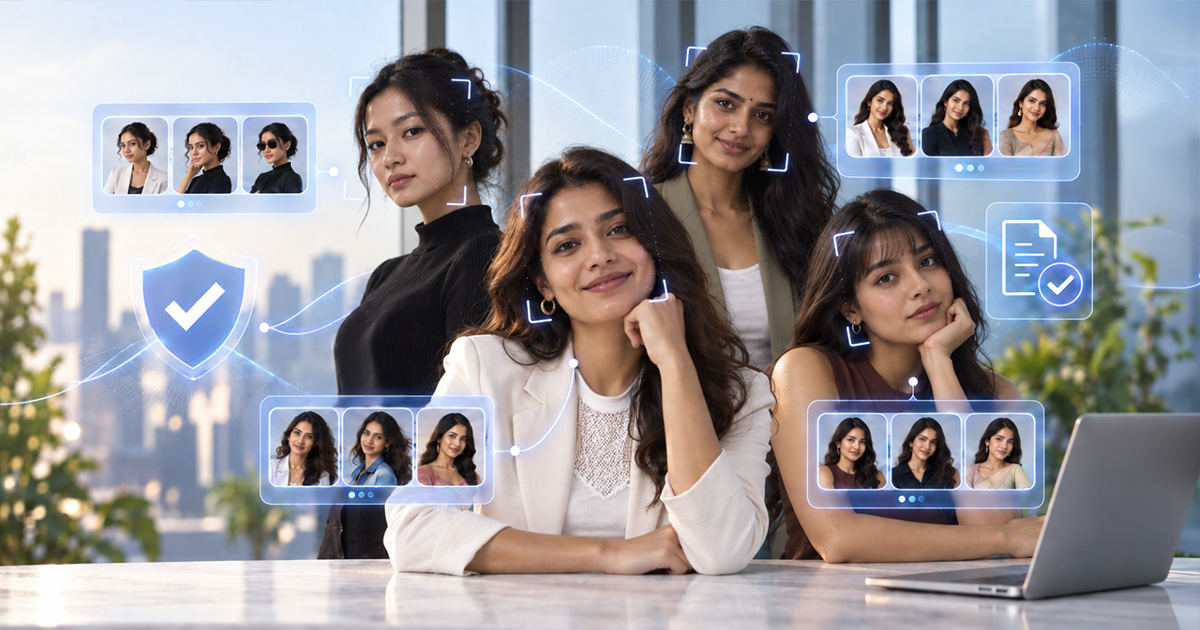
Licensed AI female actors are female talent whose likeness or digital representation may be used for authorised content that is created with the help of AI, according to specific permissions and usage agreements.
A digital representation can help in the creation of content without the talent having to be physically present in all individual shoots, depending on the agreement and production needs. This can offer brands more flexibility when developing various versions of campaign content.
But the technology does not take the place of the individual that is behind the representation. The principles of consent, agreed usage and responsible production continue to be central to the approach to talent that uses licensed AI.
How Brands Can Use AI-Enabled Female Talent
AI female actors can be used in a variety of ways to create branded content. Brands can consider AI-powered talent for:
- Digital advertising campaigns
- Social media content
- Product demonstrations
- Ecommerce and promotional videos
- Explainer content
- Training and onboarding materials
- Localised campaign versions
Flexibility sometimes is the key. For certain audiences, a campaign might need to be in a different format, script, language or version. With AI-powered production, teams can experiment with these variations while keeping the digital identity uniform throughout the campaign.
Supporting Consistency Across Campaigns
A problem in the production of large amount of content is to keep the visual and creative consistency. A brand might require more than one piece of content to showcase the same person and adjust the message for various platforms and audiences.
Brands can potentially benefit from female AI actors who can deliver a consistent representation throughout the approved content formats. For instance, a digital representation could be included in short-form social media posts, variations of a social media campaign with the same general creative approach, or promotional videos.
This can be helpful when content is required to be adapted regularly. But consistency shouldn’t be entirely automatic. However, creative teams still need to make sure that the representation, messaging, and final product is appropriate for the brand.
Why Licensing and Consent Matter
The potential to produce a realistic digital model presents issues of likeness and commercial use. It is important for brands to know what a talent has agreed to and how they are being represented before production begins.
Clear arrangements can help define factors such as:
- The types of content approved for production
- Campaign and commercial usage
- Distribution channels
- Geographic markets
- Duration of use
- Any restrictions around messaging or industries
These factors contribute to setting clearer expectations amongst brands, production teams and talent. The technology for creating an image is just one component in the image-making process, but brands must also be clear on the rights and permissions of the content.

Exploring Licensed AI Female Models and Actors
Brands exploring AI-enabled content can discover emerging Licensed AI-Talent on Talentrack based on their creative and production requirements. The following female talent profiles offer different professional backgrounds and experience areas that may be relevant to branded AI content.
Maahi Kaith is described on her profile as a method actress focused on realism and emotional depth. Her acting background and emphasis on immersive performances may make her relevant for brands exploring narrative-led or emotionally driven AI-enabled content.
Kavya Tandon’s profile highlights her ability to portray a wide range of emotions and work with emotionally demanding roles. This versatility may be useful for campaigns that require different creative expressions or character-driven content.
Based in Delhi NCR, Smriti Setya’s profile highlights determination, focus and consistency. Brands can explore her profile based on their specific creative requirements and the type of digital content they intend to develop.
Aadhya Sharma is a Mumbai-based female actress, model and influencer. Her combination of experience across these areas may make her relevant for brands exploring different types of promotional, lifestyle or digital campaign content.
Richisha’s profile highlights experience as an actor, TV anchor, programming anchor, emcee and entertainment reporter. Her presenting and performance background may be relevant for spokesperson-style, presenter-led or communication-focused content.
Finding Licensed AI-Talent for Brand Content
Brands will likely require talent that will be accessible for these new types of content as AI-driven production evolves. Talentrack helps businesses discover and connect with creative professionals and emerging Licensed AI-Talent based on their project and production requirements.
This can help brands take advantage of new content opportunities with AI while maintaining a focus on the suitability and intended use of the content.
Conclusion
Licensed AI female actors offer brands another way to explore scalable and adaptable content production. Their potential value lies in supporting approved digital representations across different campaign formats while maintaining a clearer focus on consent and defined usage.
As branded AI content evolves, licensed AI female actors can become part of a wider creative workflow that combines technology with human direction. The most effective approach will remain one where AI supports production possibilities while creative professionals and participating talent remain central to responsible content creation.
Frequently Asked Questions
Can brands use licensed AI female actors across multiple campaigns?
This depends on the permissions and commercial usage terms agreed for the talent’s digital representation.
Can licensed AI talent support multilingual branded content?
AI-enabled production may support content adaptations for different languages, subject to the agreed permissions and project requirements.
How can brands choose the right licensed AI female talent?
Brands can consider the talent’s professional background, creative suitability, intended content format, and approved usage requirements.