DISCLAIMER: This write-up is for knowledge sharing and collaborative learning only. This is NOT a legal, financial or business advisory of any kind. Readers are strongly advised to use their own research before taking any decision related to this topic. Talentrack (Fameposter) will not be responsible for any actions taken by readers/users of this write-up.
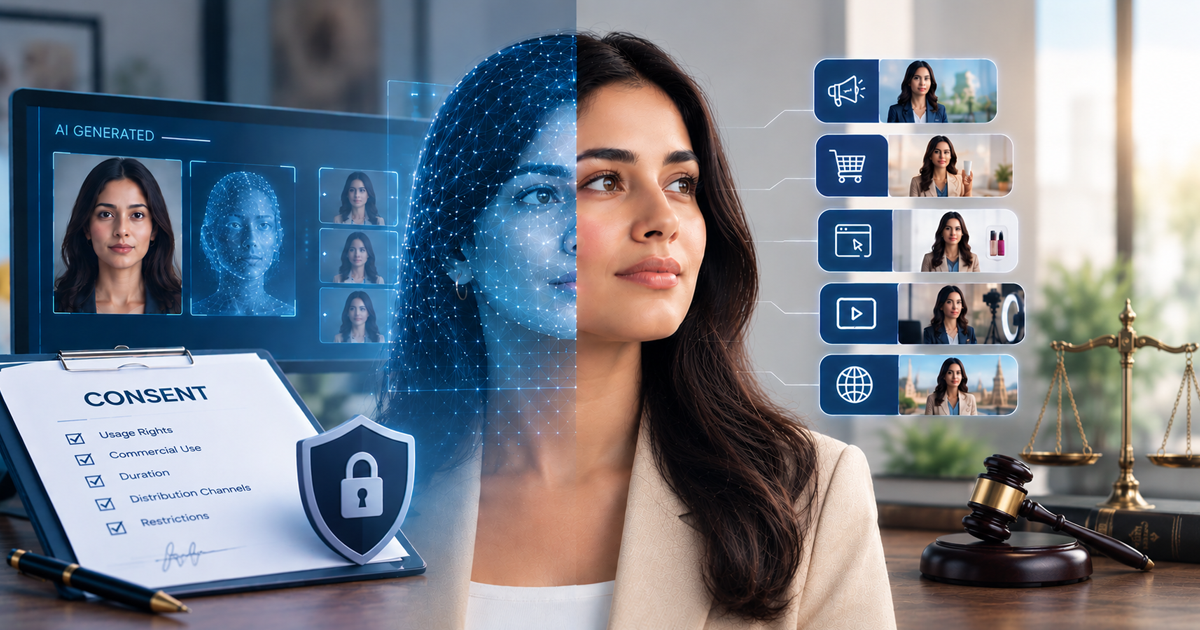
Artificial intelligence is creating new possibilities for advertising, entertainment, and branded content. AI-generated performers can appear in promotional videos, social campaigns, product demonstrations and other digital experiences without following every step of a conventional production process. However, as the use of AI talent grows, so do questions about consent, ownership and commercial usage.
This is where AI actor likeness rights become an important consideration for brands. Creating a realistic digital person is one thing. Creating, reproducing, or commercially using an identity connected to a real person raises a more complex set of questions.
Understanding these distinctions can help brands explore AI-enabled content more responsibly.
The Difference Between a Synthetic Face and a Digital Likeness
Not every AI-generated face represents a real person. Some digital identities are entirely synthetic and are created specifically for AI-generated content. Others may be based on, trained, or designed to reproduce the appearance, voice, or characteristics of an identifiable individual.
The distinction matters when considering AI likeness rights.
A completely synthetic identity and a digital representation of a real person may raise different considerations around consent and usage. When a person’s face, voice, or recognisable characteristics are involved, brands need greater clarity about whether permission has been provided and how the resulting digital representation can be used.
For commercial content, the question is not simply whether AI can create a convincing representation. It is whether the intended use of that representation has been appropriately authorised.
Why Consent Is Central to AI-Enabled Talent
AI enables content creation without the need for talent in every shoot. A digital representation can be used for various videos formats, or campaign adaptations.
But this flexibility also creates the need for greater consent.
Brands and production teams need to be aware of what an individual has consented to when their image is employed for AI-generated material. Permission might involve considering the nature of the material being developed, commercial application, where the material will be disseminated, and the length of time it will be used.
These are all aspects of the discussion on AI actors’ legal problems. With the rise of technology and the many ways to create or manipulate human identities, companies should be aware of the rights associated with the content and not just the production process.
Also read: AI Video Production for D2C Brands: A Practical Playbook
What Does Commercial Usage Mean?
A commercial use might be used in more than one advertisement. The digital representation could be used in social media campaigns, e-commerce content, product explainers, paid advertising, training, or localised versions.
This is why it’s crucial for brands to be clear about where and how an AI-generated likeness can be used.
Questions worth considering include:
- What specific type of content is the digital likeness approved for?
- Which platforms or channels are covered?
- Is the use limited to a particular campaign?
- How long can the content remain in use?
- Are there restrictions on industries or types of messaging?
- What approval processes apply before new content is created?
Having clear answers can help both brands and talent understand the scope of a project.

The Challenge of Defining Digital Likeness
One of the new challenges is that an individual’s identity is not necessarily represented by a single photo. A recognisable digital likeness could be a facial likeness, voice, mannerisms, or other features of a person.
This is why digital likeness rights are becoming a more important factor in AI production.
With the advancement of AI technology, a brand could create content that becomes even more realistic. Realistic output is not a free-for-all.
Creating a digital representation does not automatically establish the right to use it for commercial purposes.
What About AI-Generated Actors?
Things get more complicated with a wholly synthetic performer. While an AI-generated actor cannot be a direct representation of a real person, brands should be aware of the process used to create the character and whether any assets, references, or third-party content have been used.
That’s why discussions regarding AI-generated actors legal rights are expected to keep developing as AI technology continues to advance.
The bottom line for brands is that AI content should not be considered legally or ethically simple just because it’s machine-made. Documentation of content and knowledge of the production process can help in more responsible decision-making.
Why Licensed AI-Talent Offers a More Structured Approach
With the growing adoption of AI in branded content, companies are increasingly considering talent agreements that set out clearer guidelines for using AI.
Licensed AI talent can offer a more structured approach for brands to explore AI-assisted campaigns that require participation and usage based on explicit agreements and permissions.
Depending on the project, this can enable brands to think about the use of AI-powered talent for ads, social media, product demonstrations, and more, while still maintaining rights and intended use.
Businesses can use platforms like Talentrack to connect with creative professionals and young licensed AI talent according to their content needs and production needs.
Conclusion
AI is expanding what brands can create, but the technology is also creating new questions around identity and permission. AI actor likeness rights are therefore not simply a technical concern; they are part of responsible commercial content planning.
As AI-enabled production develops, brands that consider consent, defined usage and the rights behind a digital identity will be better positioned to explore the technology responsibly while building trust with the talent involved.
Frequently Asked Questions
Can a digital likeness be used after an original agreement expires?
This depends on the terms of the agreement and whether continued AI-generated actors legal rights has been authorised.
Can brands use an AI-generated voice separately from a person’s image?
Potentially, but the permitted use depends on the rights, consent, and usage terms associated with that individual’s voice.
Who should review AI talent agreements before commercial content is created?
Brands should consider having relevant legal and rights-management professionals review agreements to clarify permitted usage and responsibilities.